Ten specialties, one system
The software underneath is the same for everyone. What changes is the content — the forms, the diagnoses, the medicines, the appointment types and what each specialty calls its patients back for.
Obstetrics and gynaecology is in daily use at a pilot practice in Mauritius. The other nine are built and written, and the first doctor in each one shapes the lists before anybody else sees them — which is an invitation, not a disclaimer. If you are the first cardiologist or the first orthopaedic surgeon on it, your corrections are the ones that stick.
Pick your specialty
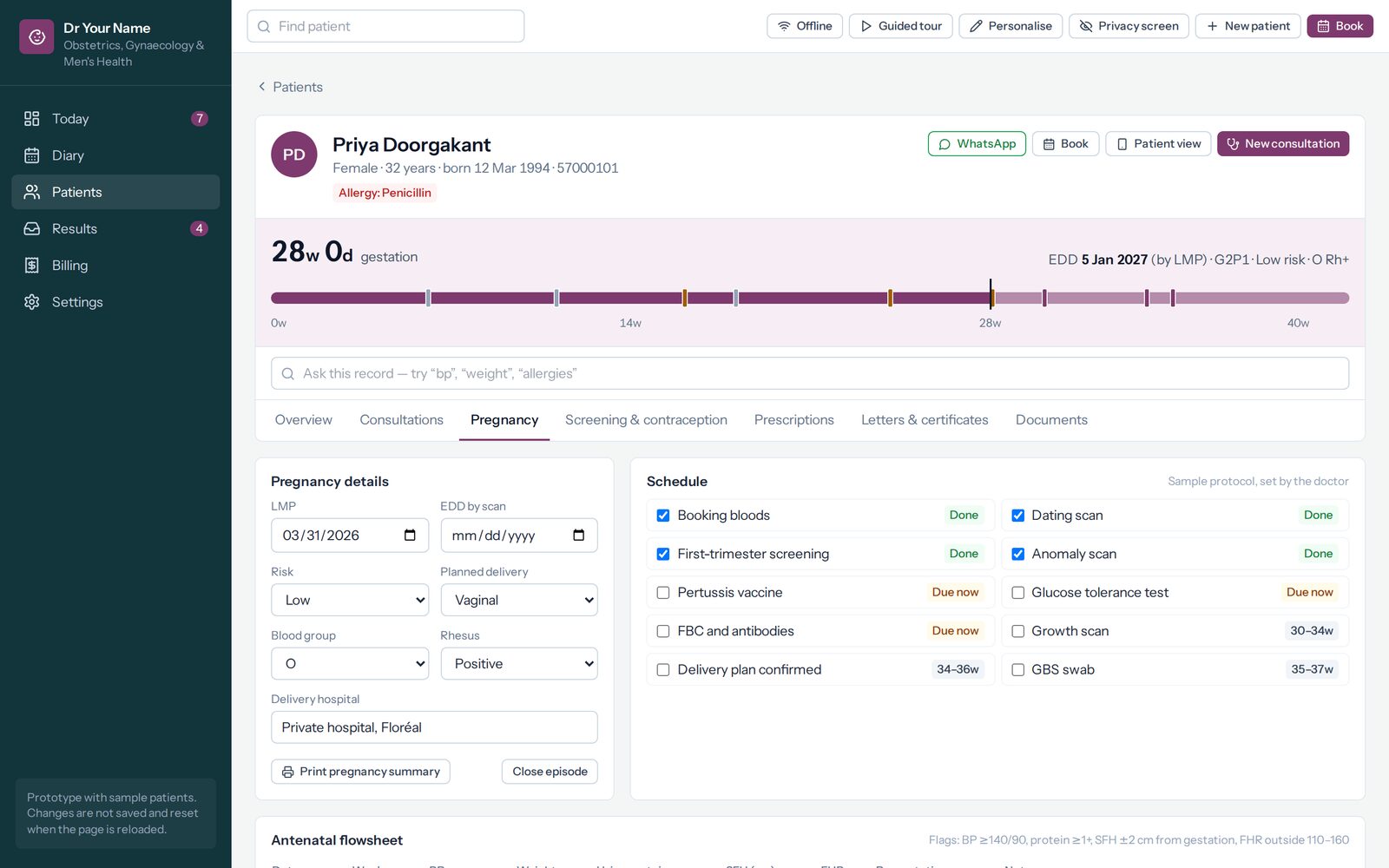
Obstetrics & gynaecology
Every antenatal visit on one flowsheet, with the summary she carries to the hospital a click away.
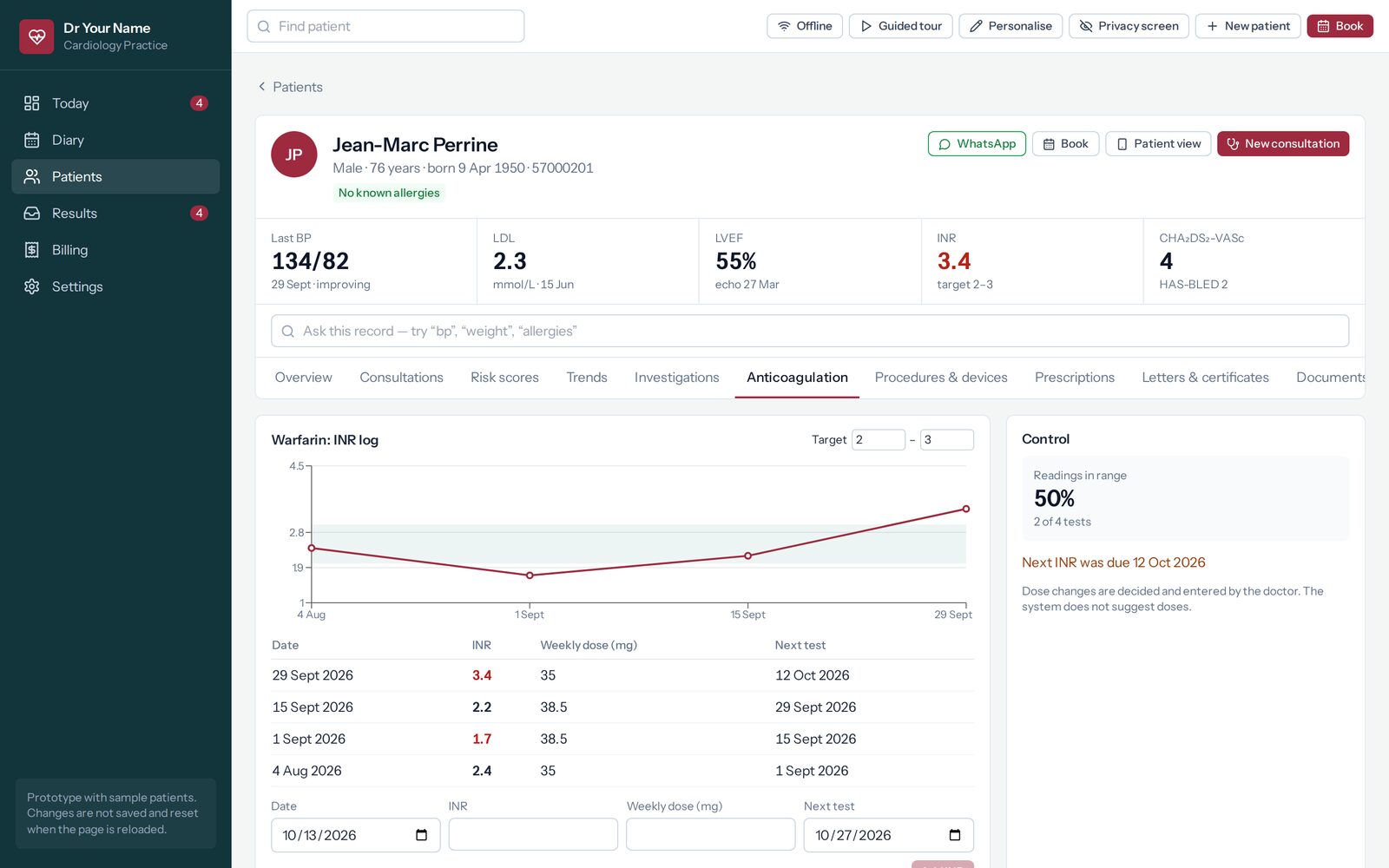
Cardiology
The warfarin log with the target range drawn on it, and what share of tests fell inside it.
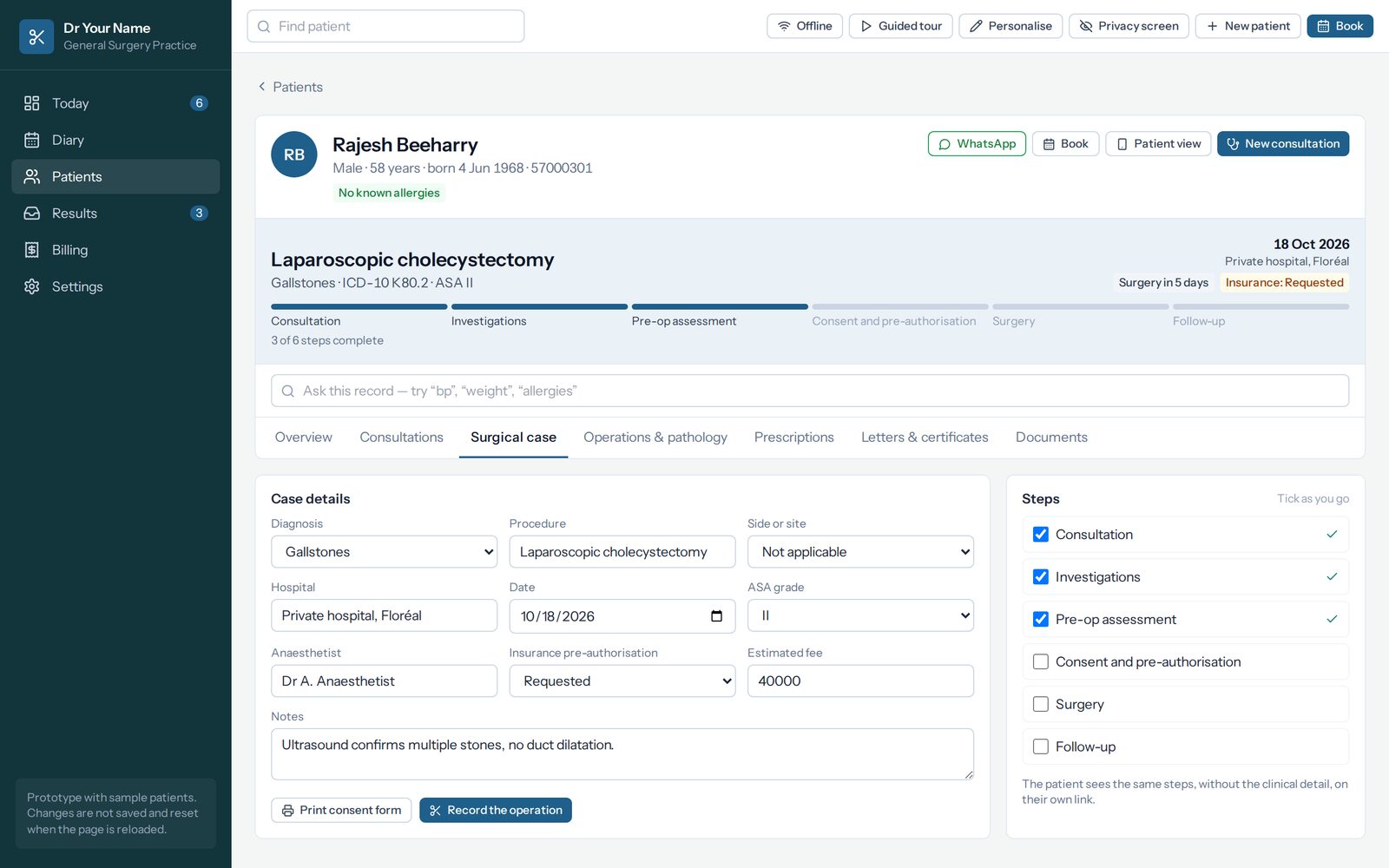
General surgery
One case from listing to histology, with the steps that are done and the ones that are not.
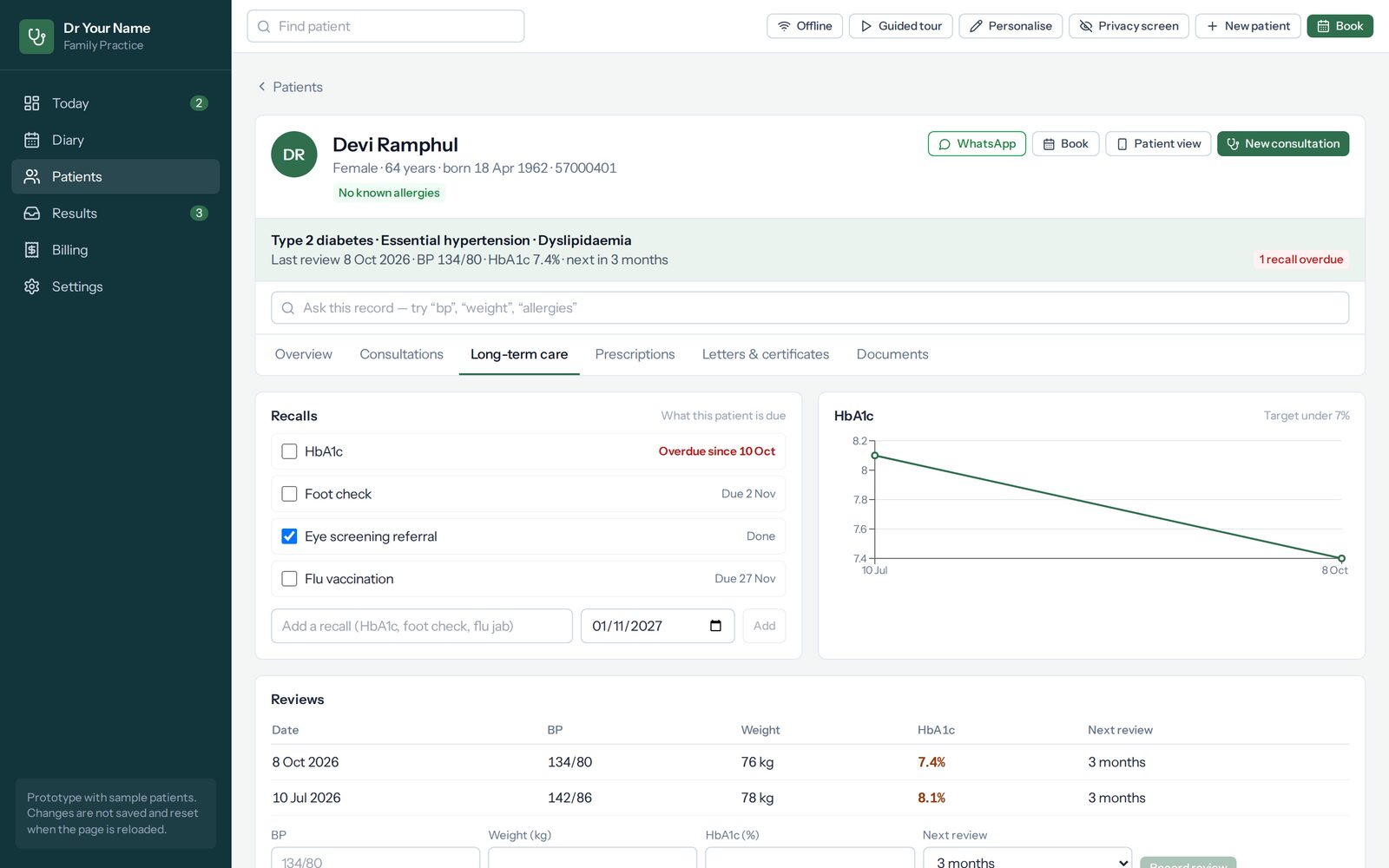
General practice
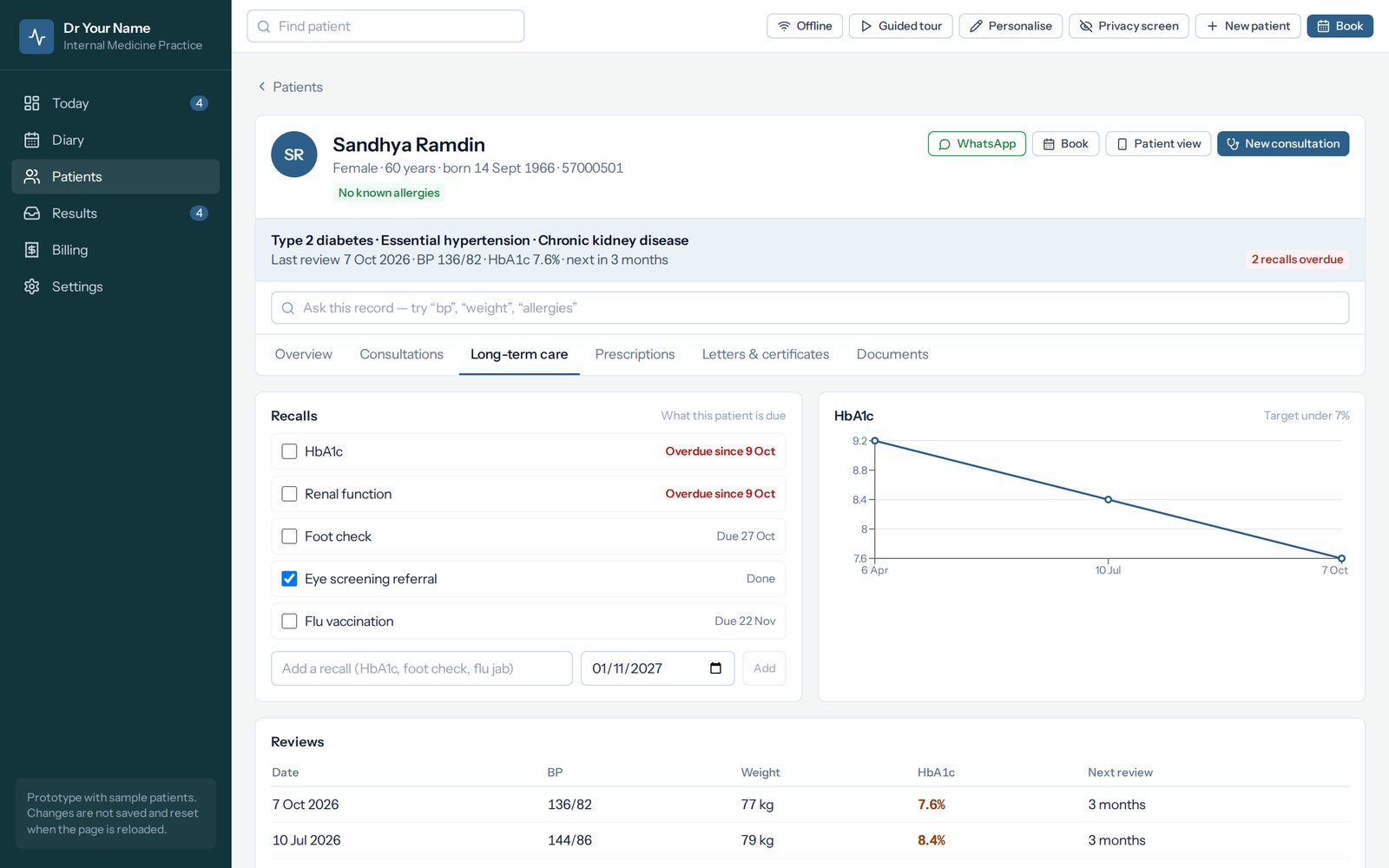
Recording a long-term condition starts the recalls it commits you to.
General medicine
HbA1c, kidneys, feet, eyes and vaccination — each with its own next date rather than one yearly review.
Orthopaedics
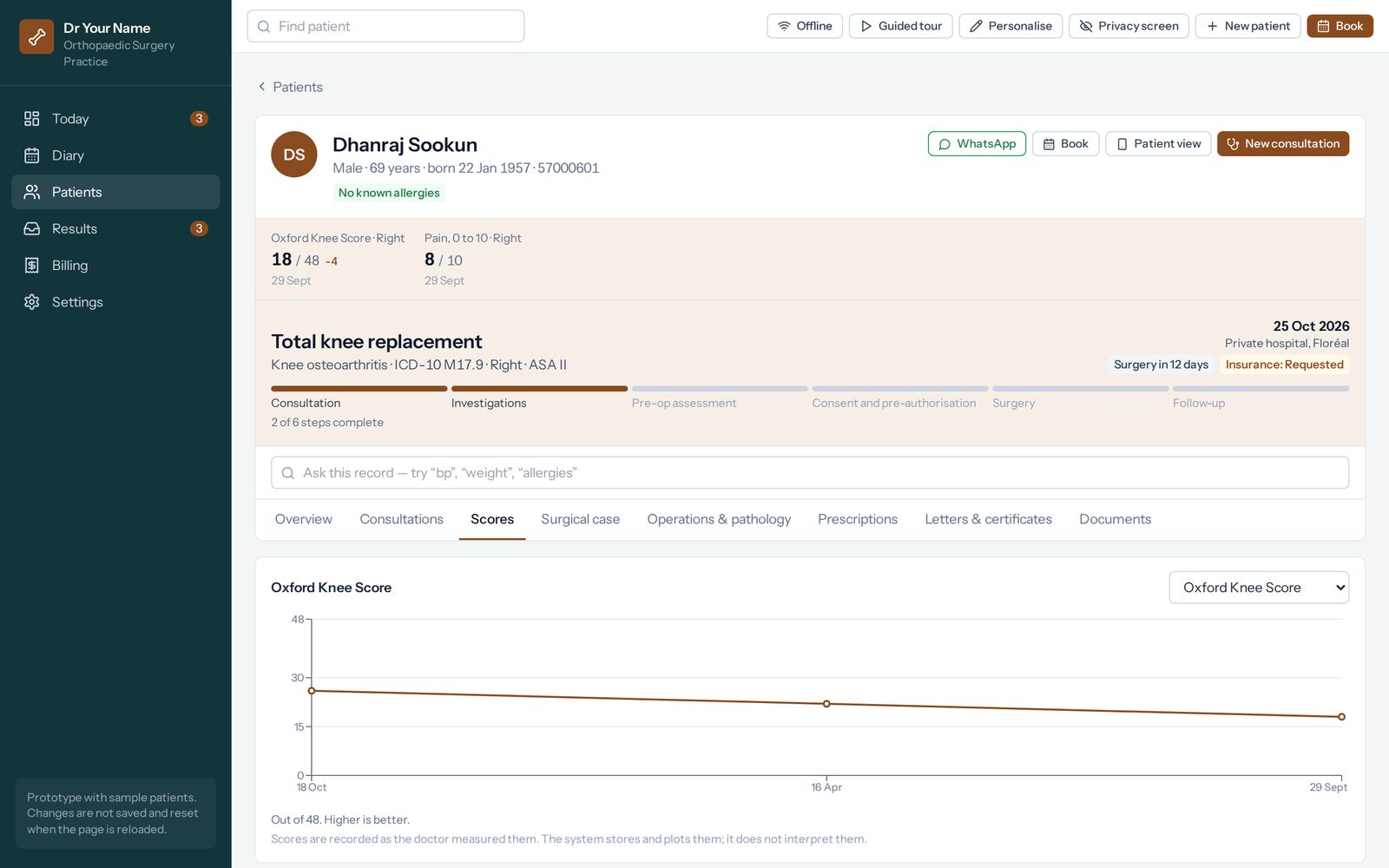
Function scored and plotted, so recovery is something you can turn round and show a patient.
Ophthalmology
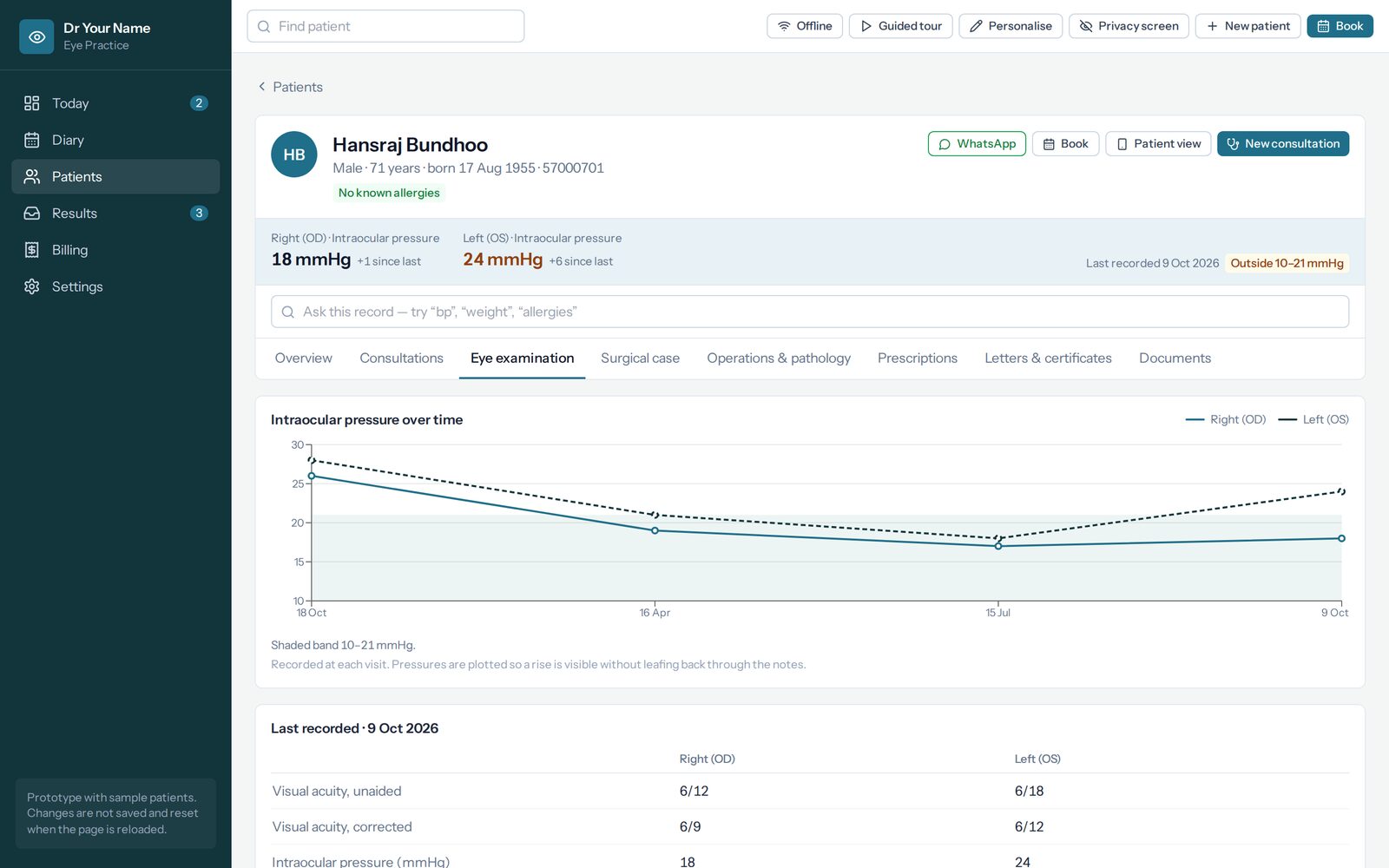
Both eyes side by side, with pressure plotted against the band you set for that patient.
Ear, nose and throat
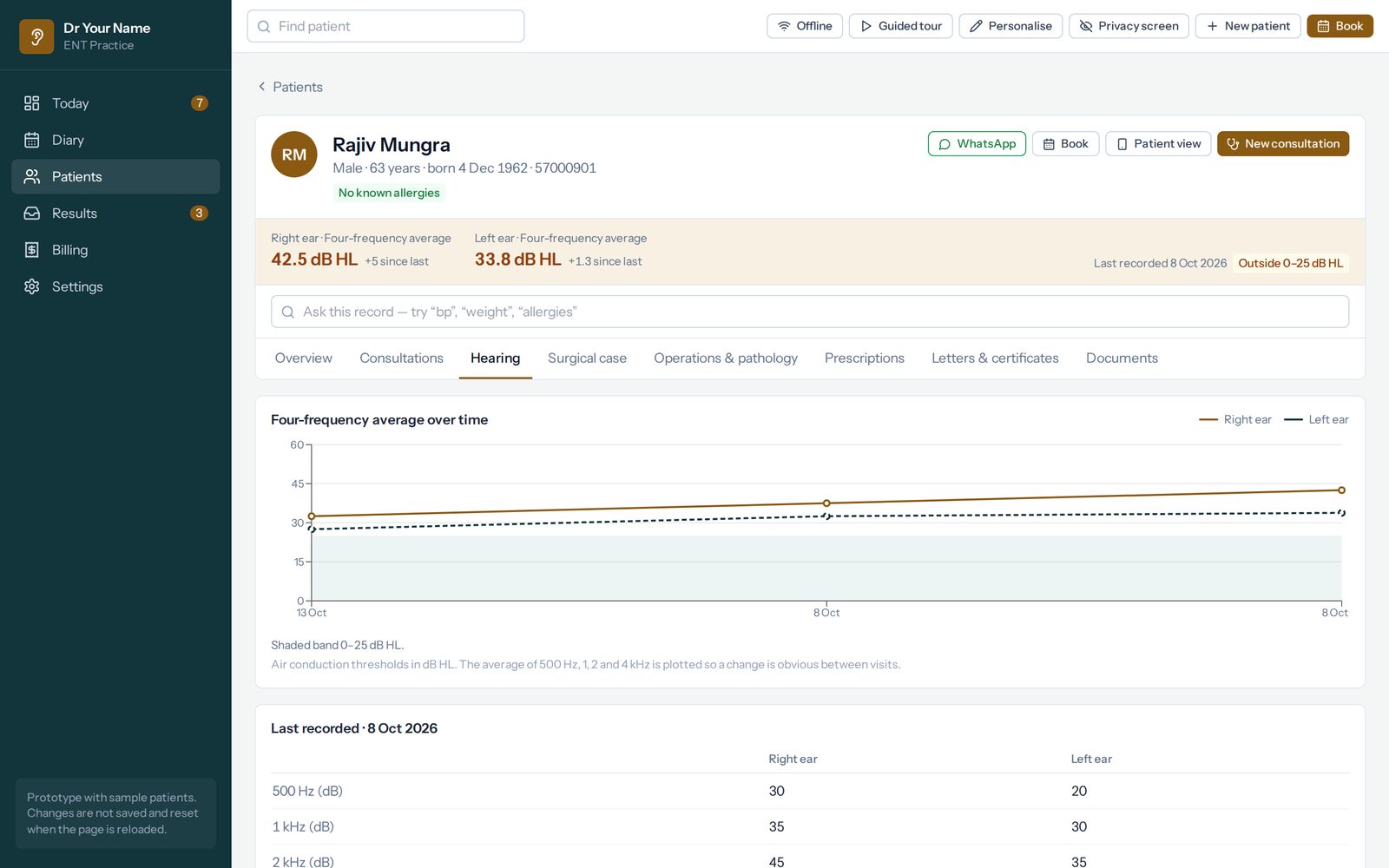
Thresholds for each ear, and no four-frequency average at all when a frequency is missing.
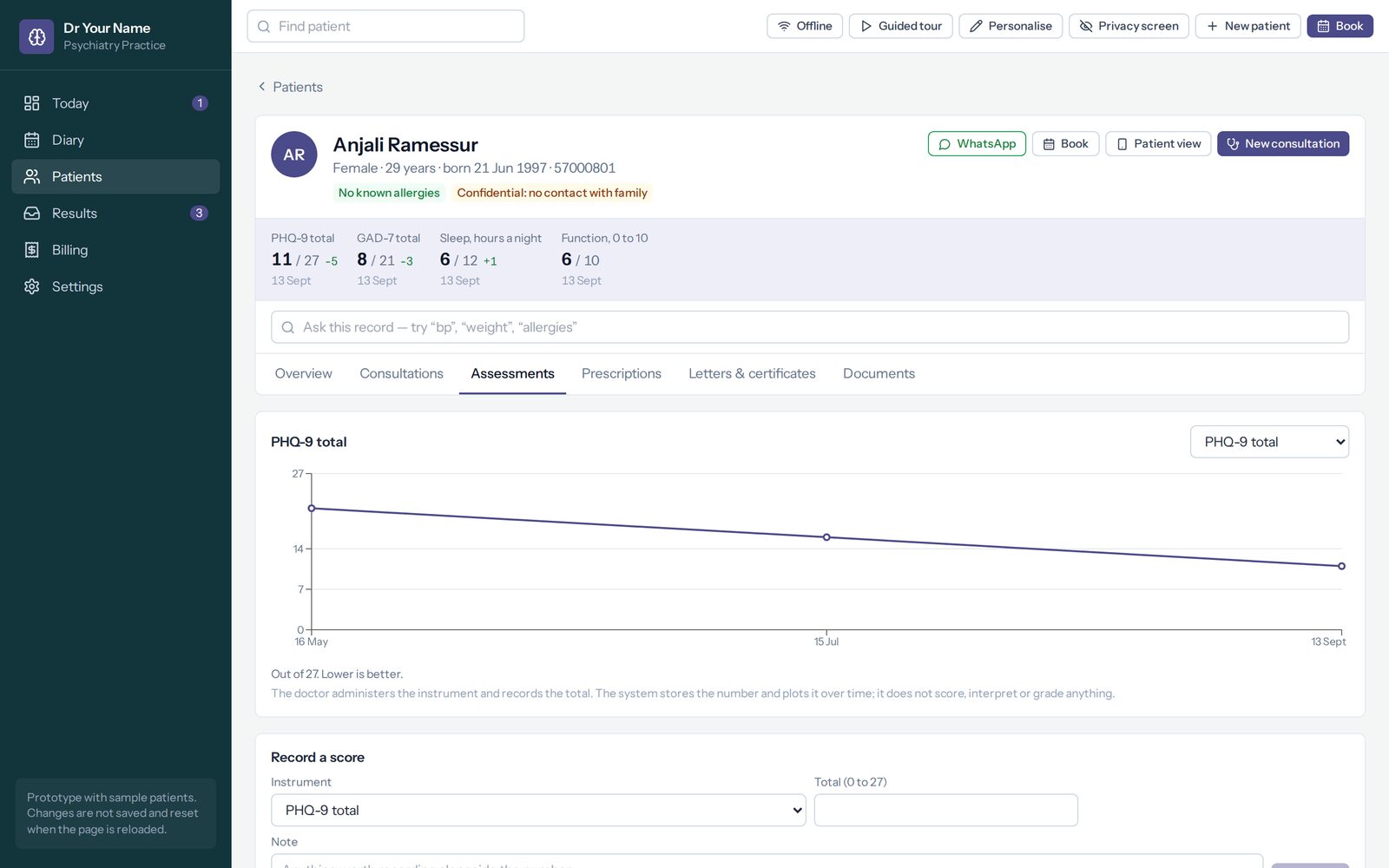
Psychiatry
Discreet from the first minute: no visit type in a reminder, no booking by a stranger with a link.
The oncology pack is built, and its demo is with an oncologist before it is shown to anybody else.
It is the one specialty where being wrong about a list has consequences beyond annoyance.
Oncology
The cancer as its own record — cycles given or held, lesions measured and summed. It calculates no dose.
What a pack is
The consultation form
The fields a doctor in that specialty fills in, in the order they are asked — an antenatal visit and a knee review have almost nothing in common, and a shared form serves neither.
The lists
Diagnoses with their ICD-10 codes, medicines, investigations, appointment types with real durations and fees, and the recalls that put a patient back on your morning list.
Yours to change
All of it is content you edit in the browser, not code. That is also why an eleventh specialty is weeks of writing rather than a new piece of software.
If yours is not here
Tell us which one. A new pack is a few weeks of content work with a doctor who practises it, and the ten that exist were all written that way. Dermatology, paediatrics, nephrology, urology — none of them is a different piece of software, only a different set of lists.
See one running
Nine of the ten have a demo you can open from this site, with sample patients in it and nothing to fill in. Oncology deliberately does not: that pack is being read by an oncologist before it goes to anybody.