Praxia for obstetrics & gynaecology
Twenty antenatal visits on one line instead of twenty pages. The summary she carries to the hospital, printed in a click. Her contraception and screening dates watched, so nothing lapses quietly.
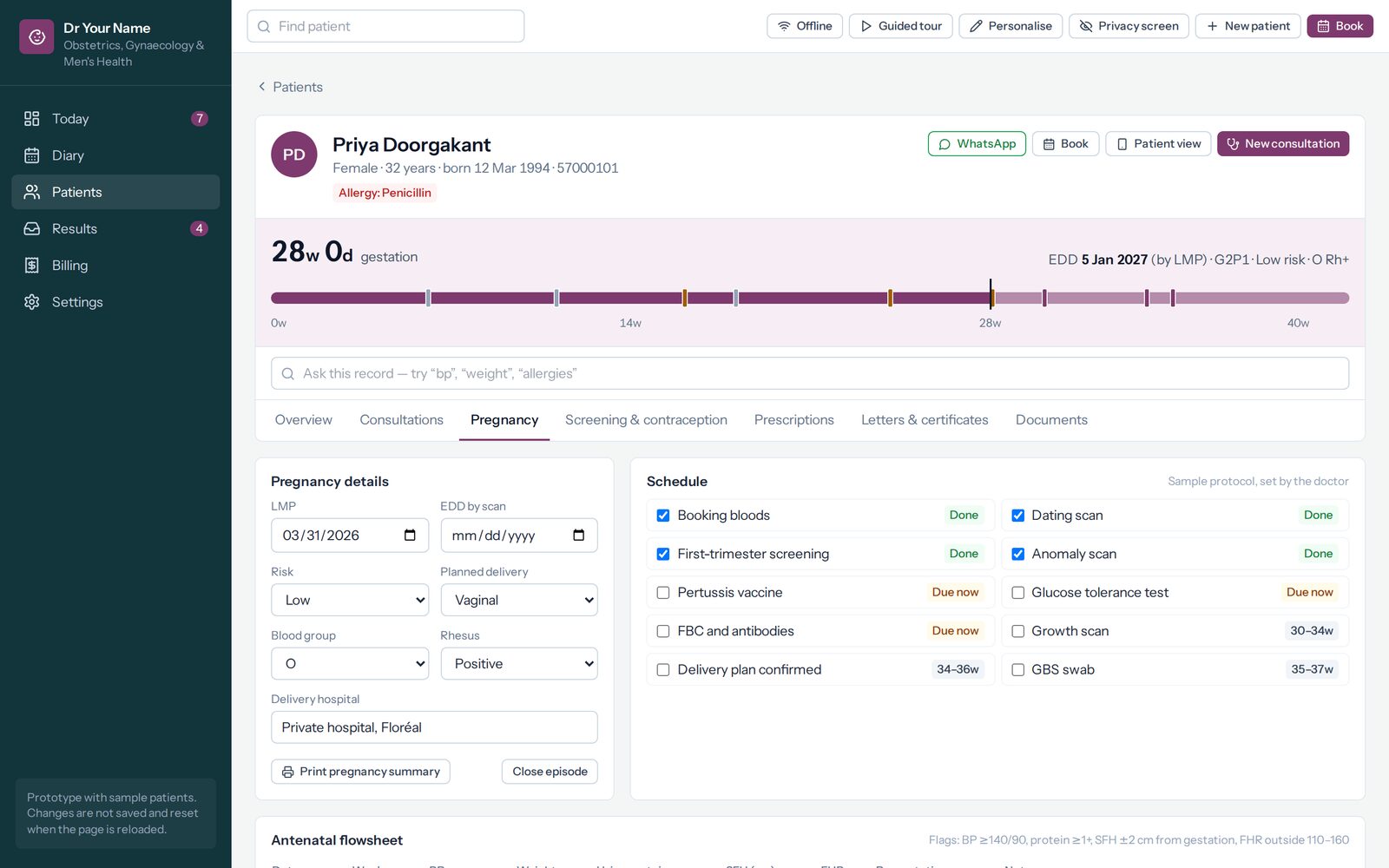
A pregnancy is the same six numbers, twenty times
Blood pressure, urine, weight, fundal height, fetal heart, presentation. On paper that is twenty sheets in a folder, and a rise you would have seen at a glance is spread across pages you have to lay side by side. Praxia keeps them on one line.
The last reading is raised because it crosses a threshold — not because Praxia has decided anything. It flags; you diagnose. Everywhere in Praxia that distinction holds.
The sheet she carries
A woman who delivers at a hospital that is not your practice arrives with whatever you gave her and nothing else. Praxia prints a one-page summary: gestation and how it was dated, blood group and rhesus, risk, where she plans to deliver and how, her visits, and what is still outstanding.
It prints “Not recorded” rather than a guess. If nobody has recorded her gravida and para, the sheet says so instead of filling in a default — because a midwife reading a confident wrong number acts on it, and a blank is a question she can ask.
How a pregnancy was dated is on the sheet too. A due date from the dating scan and one counted from an uncertain last period are different facts, and whoever reads it next has no other way to tell them apart.
Screening and contraception, watched rather than remembered
A coil or implant past its life is a patient who believes she is protected and is not. Praxia holds the method, the date it was fitted and the date it expires, and tells you before it lapses rather than after.
- Contraception: method, fitted, expires, removal recorded
- Cervical screening: history, result, next due
- Colposcopy: referrals and findings alongside the screening that prompted them
- Recalls on the practice’s own intervals, not a fixed schedule
The first screen each morning leads with what has fallen due — above the day’s appointments, deliberately. The appointments will happen whether or not anyone looks; the patient who has not been in for two years will not.
The morning list, and the room
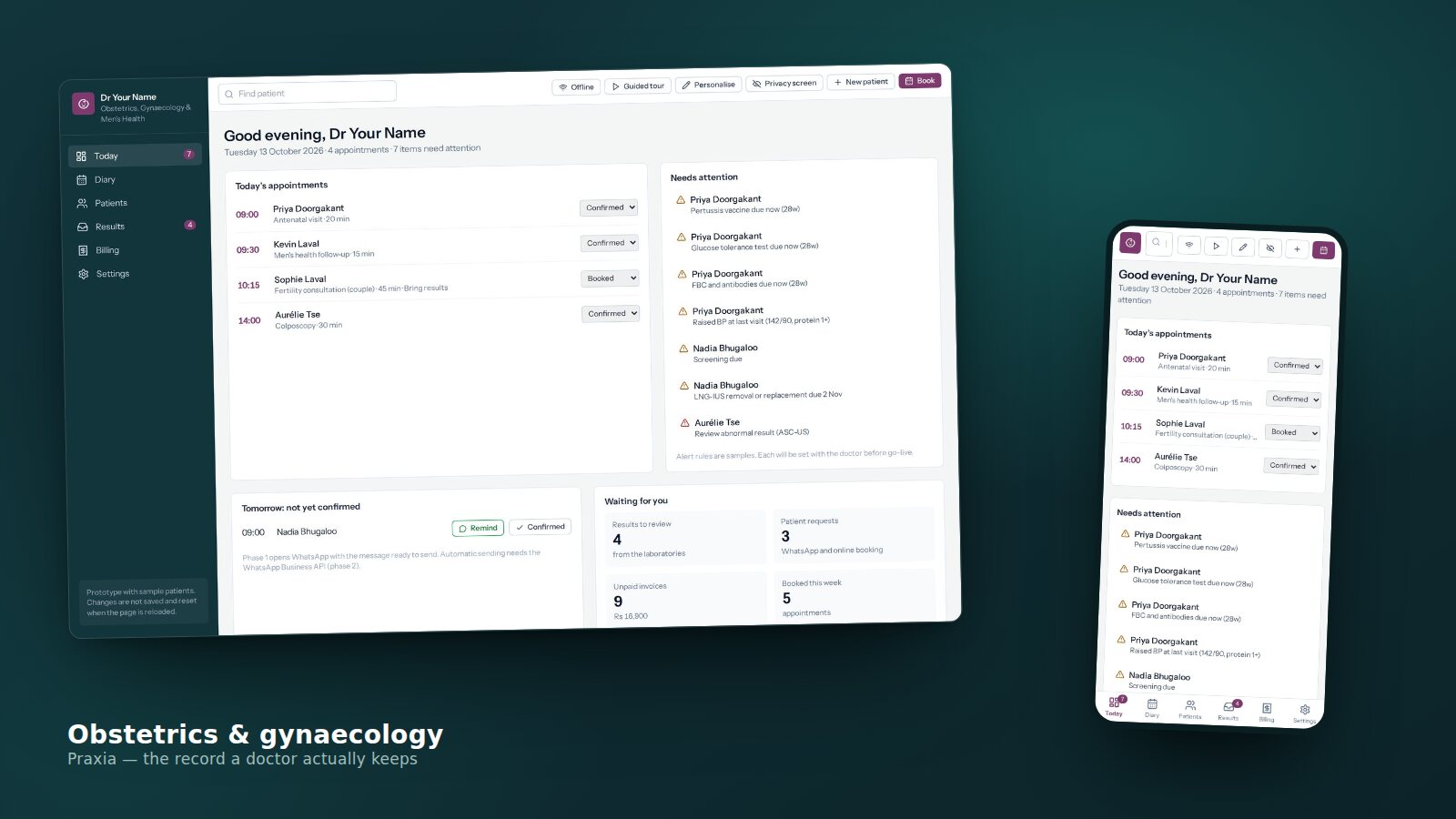
Antenatal visits, the gynaecology clinic and the screening recalls arrive on one screen, with whatever has fallen due above the day’s appointments. The record opens on a phone for the visit that does not happen at a desk.
What comes in the pack
Set up before the first booking appointment, and every list yours to change afterwards.
- Three consultation forms — gynaecology, antenatal visit, men’s health
- 21 diagnoses, each with its ICD-10 code for insurance claims
- A medicines list with the strengths and frequencies you prescribe
- Appointment types with durations and fees
- The scans and tests an obgyn practice orders
- Recalls for what you call patients back for
A diagnosis you never pick comes off the list; one you reach for weekly goes on. The medicines carry what you actually prescribe in pregnancy, at the strengths you prescribe it.
What it does not do
Worth saying plainly, because in obstetrics a system that fills in a blank is worse than one that leaves it empty.
- It does not date a pregnancy. You record how it was dated — a scan or an uncertain last period — and the summary prints that difference instead of smoothing it away.
- It does not assess risk. Low, moderate or high is your judgement, recorded as yours and printed as yours.
- It does not calculate doses. You prescribe; it prints what you prescribed, and the medicines list is your practice’s own.
Before the first booking
The demo opens from a USB stick with no internet: a full antenatal record, a woman at 28 weeks, and the summary sheet she would carry to the hospital. Nothing to install.