Praxia for ophthalmology
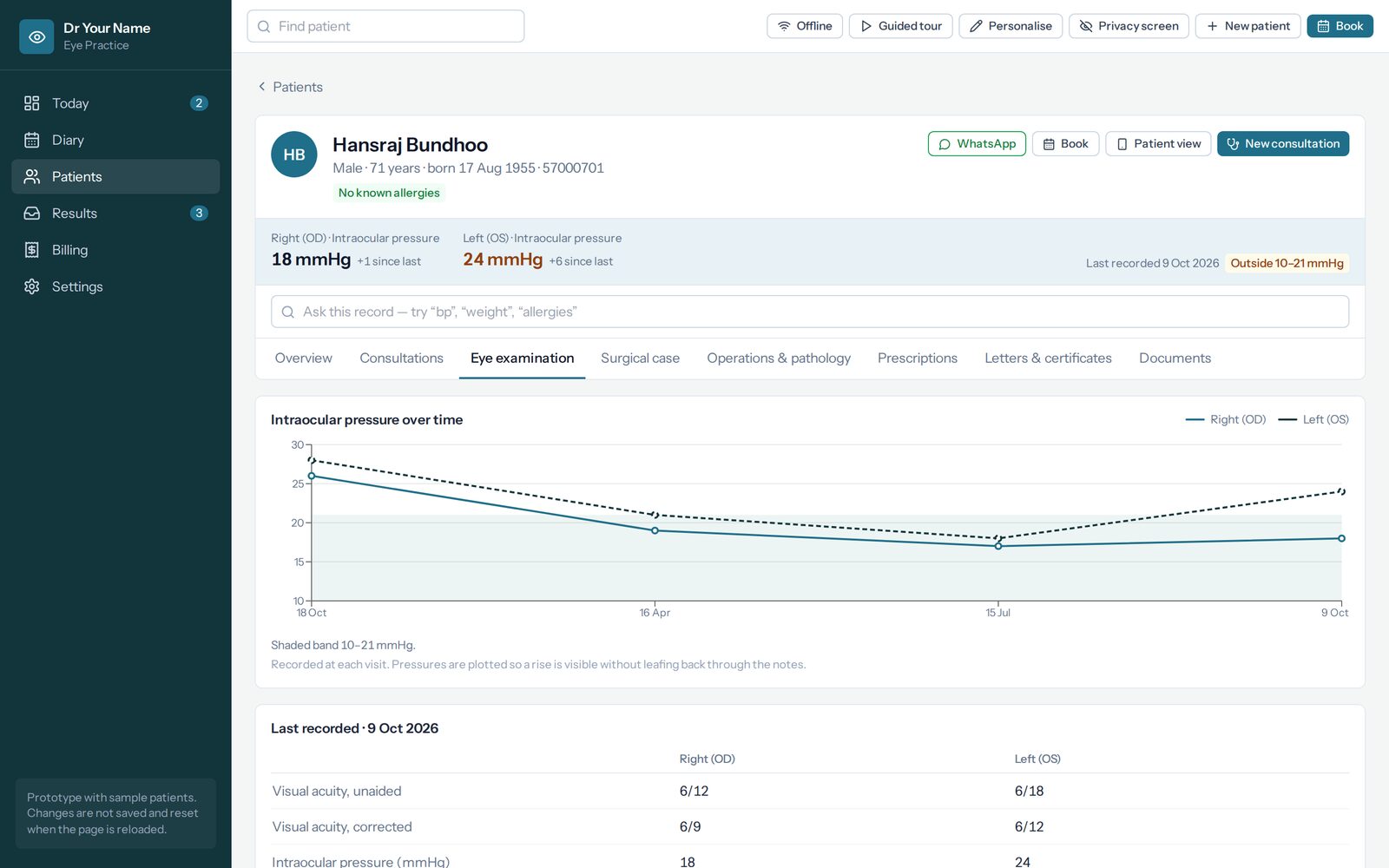
Both eyes side by side at every visit, and pressure plotted against the range you set for that patient. The examination is kept as one record because that is how it is read.
One examination, two sides
An eye examination is never about one eye. The right and the left are recorded together, compared with each other, and compared with the same pair six months ago. Praxia keeps them as a single record with two columns, in the order you read them:
- Visual acuity, unaided and corrected
- Intraocular pressure, in mmHg
- Sphere, cylinder and axis
- Lens — clear, early, moderate or dense cataract, or pseudophakic
- Fundus — normal, background, pre-proliferative, proliferative, maculopathy, or not seen
Not seen is a choice, not an omission. A fundus nobody could view is a fact about the examination, and it should not look the same as a fundus that was normal.
Pressure, against the band you chose
Praxia says two things about this patient, and both are arithmetic. The right eye is outside the 10 to 21 band recorded for them. And it is up by five or more since the last visit, which it states as a difference between two dates rather than as a trend.
It does not say glaucoma, it does not stage anything, and it does not suggest a drop. The band itself is a setting, because a target pressure is a decision about one patient and not a property of the software.
Screening and cataract, on their own forms
Diabetic eye screening and a cataract assessment ask different questions from a general consultation, so each has its own form rather than a longer version of the same one. The biometry, the pressure check, the visual field and the OCT scan are appointment types with their own lengths and fees, so the diary reflects what the room is actually doing.
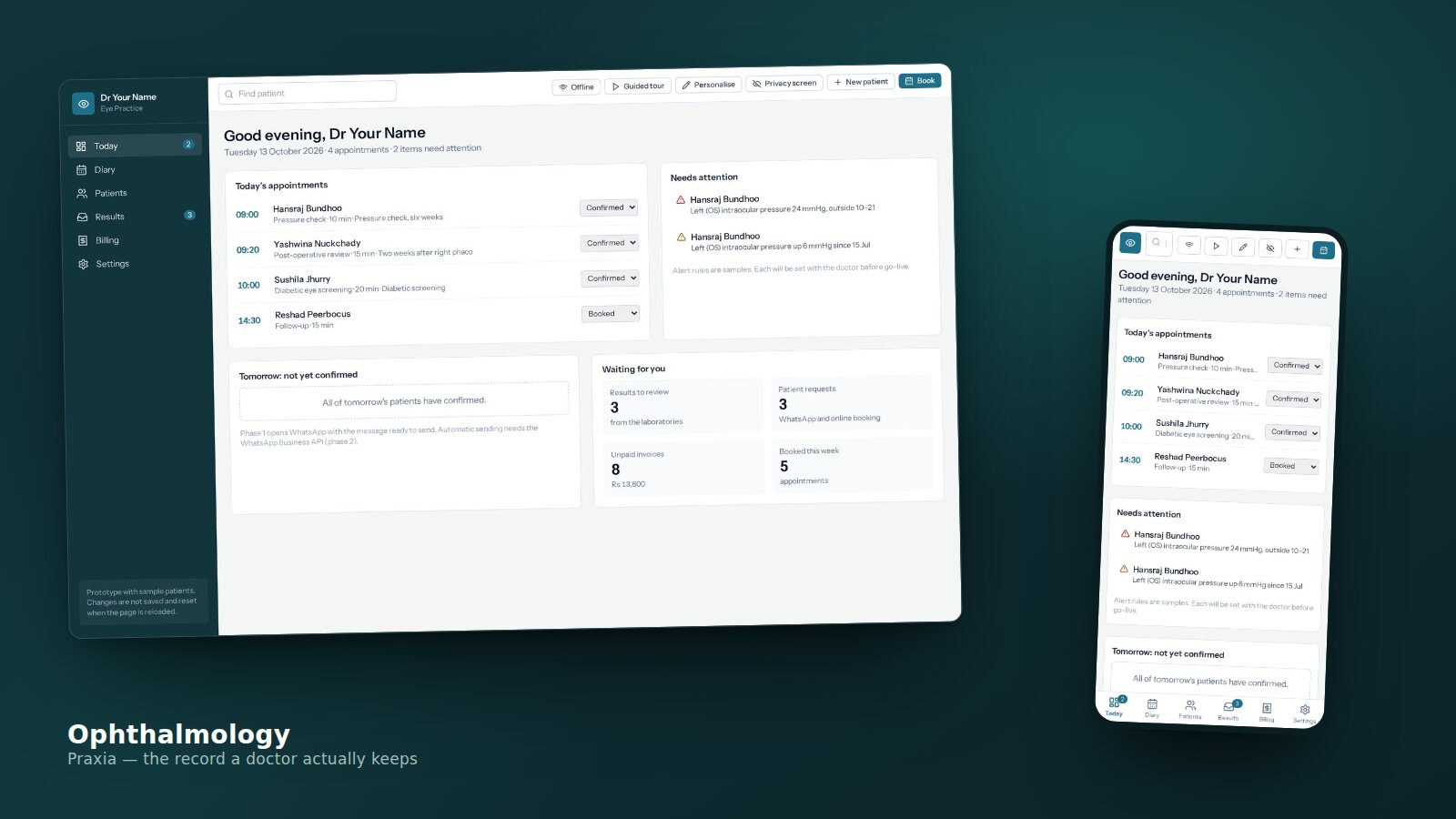
Four recalls come ready: pressure and field check, diabetic eye screening, macula review and refraction. A patient on drops who has not had a pressure checked in a year is on the morning screen, above the day’s appointments.
The morning list, and the pressure nobody checked
A patient on drops with no pressure recorded for a year is on the first screen, above the day’s clinic. The examination opens on a phone between rooms.
What comes in the pack
Ready before the first cataract list, and every list yours to change afterwards.
- Three consultation forms — new eye consultation, diabetic eye screening, cataract assessment
- 22 diagnoses, each with its ICD-10 code for insurance claims
- 15 medicines, drops included, with the strengths and frequencies you prescribe
- 11 appointment types — consultations, pressure checks, fields, OCT, biometry, laser, theatre lists
- 21 tests and scans an eye practice orders
- Four recalls for what you call patients back for
Each of those is a list you edit in the browser, and the target pressure band is set per patient rather than by us.
What it does not do
Worth saying plainly, because an eye record that averages or assumes is worth less than an empty one.
- It does not read a scan. No image analysis of any kind — an OCT or a field test is recorded and reported by you.
- It does not grade retinopathy. You choose the grade from your own list; it stores what you chose.
- It does not calculate a lens power. Biometry belongs to the device that measured it.
Try it against a glaucoma clinic
The demo opens from a USB stick with no internet: both eyes at five visits, a pressure climbing out of its band, and a cataract case on a theatre list.