Praxia for general practice
A short consultation, a long list of patients, and the things that only matter if somebody remembers them. Praxia is the part that remembers.
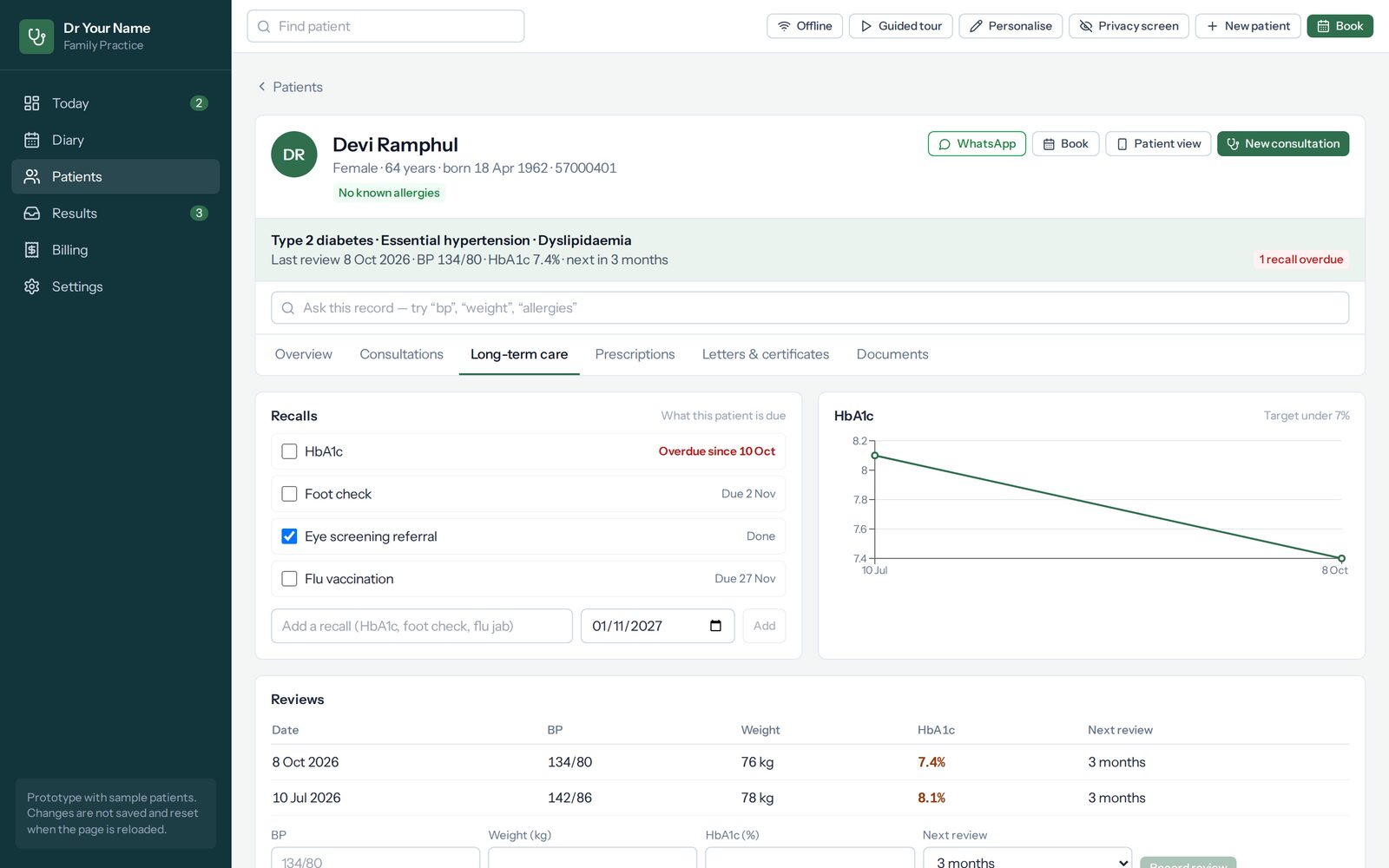
Recording a condition starts what it commits you to
Hypertension is not one entry. It is a pressure every few months, a kidney test and a lipid profile each year, a medication review, and a weight worth watching. Write “hypertension” in a paper file and you have written one word; the twelve things it commits you to live in your memory.
In Praxia, recording the condition sets the recalls that go with it, on your own intervals. The overdue list fills itself rather than waiting to be filled in.
Six readings taken a year apart are six slips of paper in a folder, and a drift like this one is the hardest thing on earth to notice at that interval. On one line it is obvious. The last reading is marked because it crosses a threshold — not because Praxia has decided anything.
Twelve recalls, ready on the first day
- HbA1c
- Kidney function and urine ACR
- Foot examination
- Eye screening
- Blood pressure
- Lipid profile
- Weight and waist
- Thyroid function
- Medication review
- Influenza vaccination
- Cervical screening
- Childhood vaccination
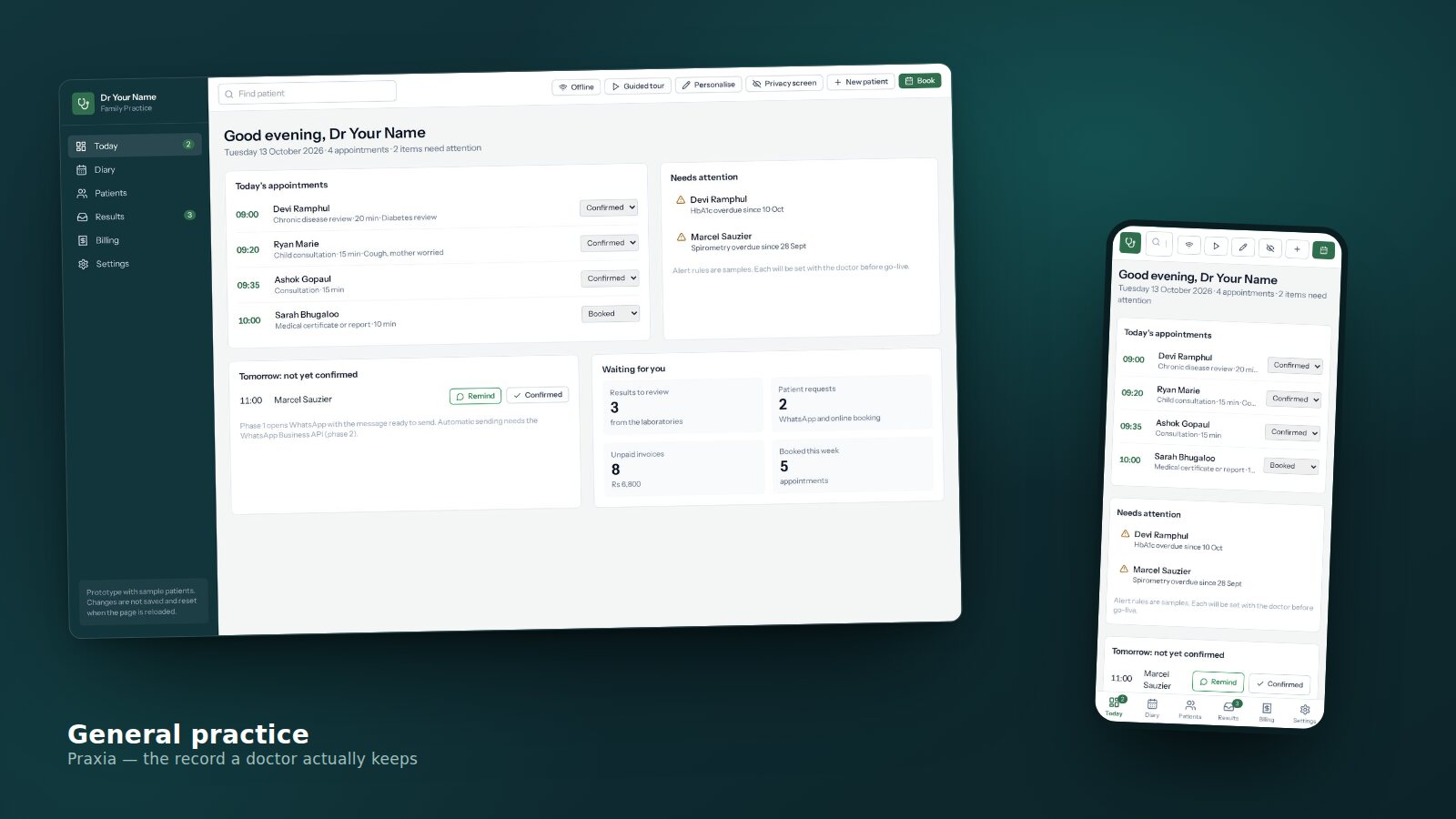
What has fallen due is the first thing on the screen each morning, deliberately above the day’s appointments. The appointments will happen whether or not anybody looks at them. The diabetic patient who has not been in for fourteen months will not.
Referrals to a person, not to a department
General practice in Mauritius runs on knowing which cardiologist to send this patient to, and on the letter arriving with enough in it to be useful. Praxia keeps your own list of specialists — name, specialty, hospital, how to reach them — and prints the referral on your letterhead with the history, the medicines and the results already in it.
A referral you issued six months ago reprints exactly as it was issued: same date, same content, same number. Nothing is quietly updated to today’s version of the record.
Children, and the parent in the room
The child consultation form records weight, height and temperature, what the parent reported, and the vaccinations given — and the childhood vaccination recall carries the next one. A growth measurement is stored as a number, so the next visit can be compared with this one instead of recalled.
The morning list, and the patient who has not been back
Overdue recalls lead the first screen, above the appointments — the patient in the diary will arrive on their own, and the one two years overdue will not. The record opens on a phone for a home visit.
What comes in the pack
Loaded before the first surgery, and every list yours to change afterwards.
- Three consultation forms — general consultation, chronic disease review, child consultation
- 27 diagnoses, each with its ICD-10 code for insurance claims
- 14 medicines with the strengths and frequencies you prescribe
- 15 appointment types, each with its length and its fee
- 18 tests and scans a general practice orders
- 12 recalls for what you call patients back for
Take off a diagnosis you never pick and add the one you reach for weekly. The recall intervals are yours from the first day rather than ours.
What it does not do
Worth saying plainly, because general practice is where software is most tempted to start deciding things.
- It does not diagnose. It records what you found and what you decided, and raises only what crosses a threshold you set.
- It does not prescribe for you. You choose the drug, the strength and the duration. It prints them and keeps a copy of exactly what was issued.
- It carries no guideline. No risk score and no decision support — a number like that belongs to the guideline it came from and the year it was published.
An hour with your own list in mind
The demo opens from a USB stick with no internet: a diabetic review, a child consultation, and a recall list that has already fallen behind.