Praxia for cardiology
Pressure, weight and lipids as a line rather than a pile of letters. INR against the target you set, with the dose beside it. Echo results kept as numbers, so two studies can be compared instead of re-read.
Anticoagulation is a conversation with one number
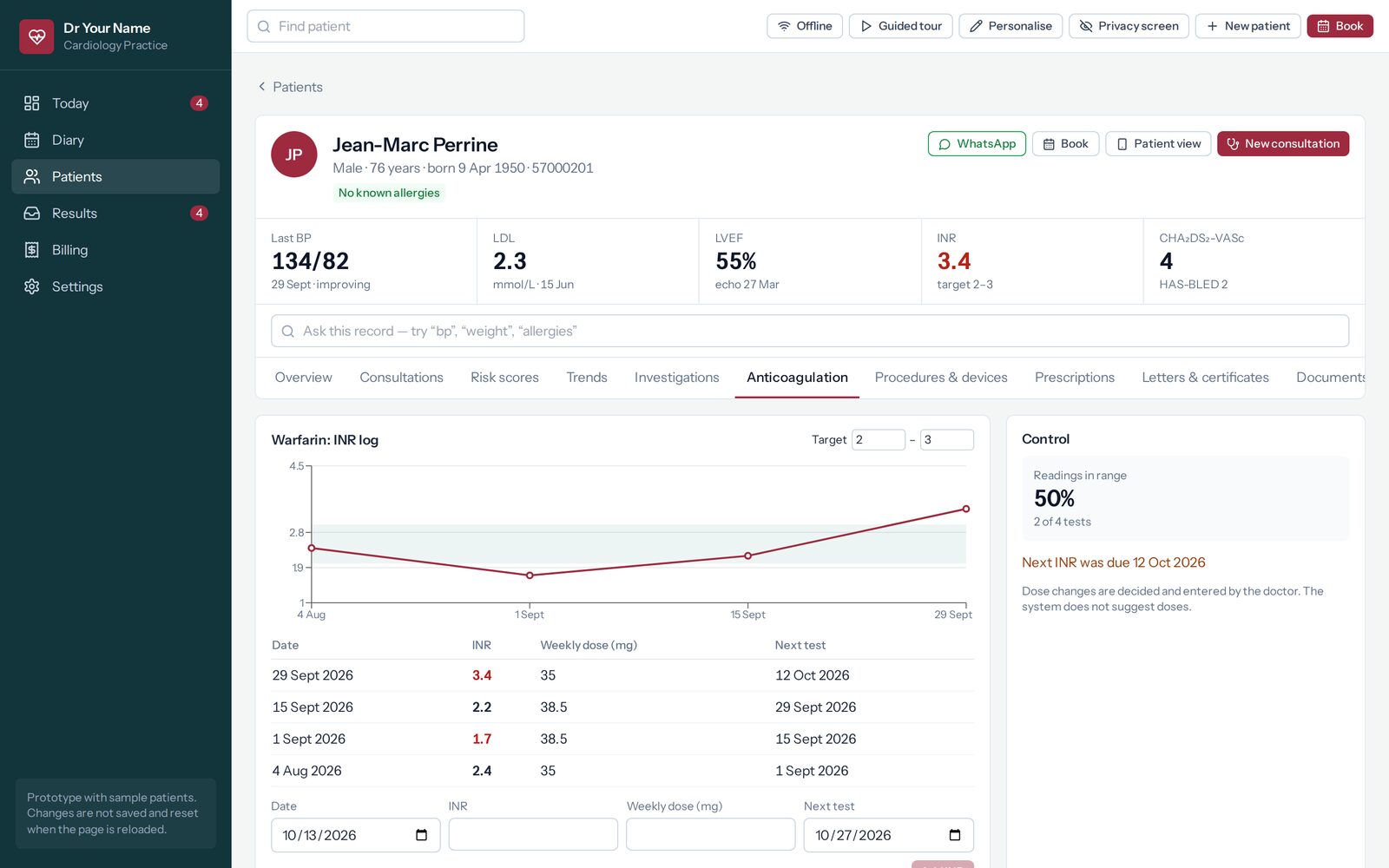
A patient on warfarin is a target range, a result every week or two, and a weekly dose that moves. Kept on paper, the only way to see how the last three months went is to lay the letters out on the desk and read them in order.
Praxia holds the drug, the target range and every result, and tells you what share of the tests fell inside the range. That figure is arithmetic — tests in range over tests done — not an opinion about control. The last reading above is marked because it is outside the range on the patient’s own plan, and for no other reason.
Each result carries the weekly dose that followed it and the date of the next test, so a nurse looking at the record tomorrow can see what was decided and when the patient is expected back.
Echoes as values, not as paragraphs
An echo report filed as a PDF is a document you have to read again every time you want one number from it. Praxia stores the measurements that get compared — ejection fraction, left ventricular dimension, left atrium, pulmonary pressure — alongside the written conclusion, which is kept exactly as the reporter wrote it.
Both, deliberately. The values make two studies comparable at a glance; the paragraph is the one who reported it speaking, and nothing paraphrases it.
Pressure, weight, lipids, kidneys — on one line each
The readings a cardiology follow-up turns on are recorded as values and plotted over time: blood pressure with both numbers, weight, LDL cholesterol, HbA1c and eGFR. A rise you would have seen immediately on a chart is invisible in a stack of result slips.
- Seven recalls set up and ready: blood pressure, lipids, kidney function and electrolytes, echocardiogram, device check, influenza vaccination and medication review
- Each on your own interval, which you change in the browser
- What has fallen due is on the first screen each morning, above the day’s appointments
The order is deliberate. The appointments will happen whether or not anyone looks at them; the patient who has not been back for fourteen months will not.
The morning list, and the INR that is due
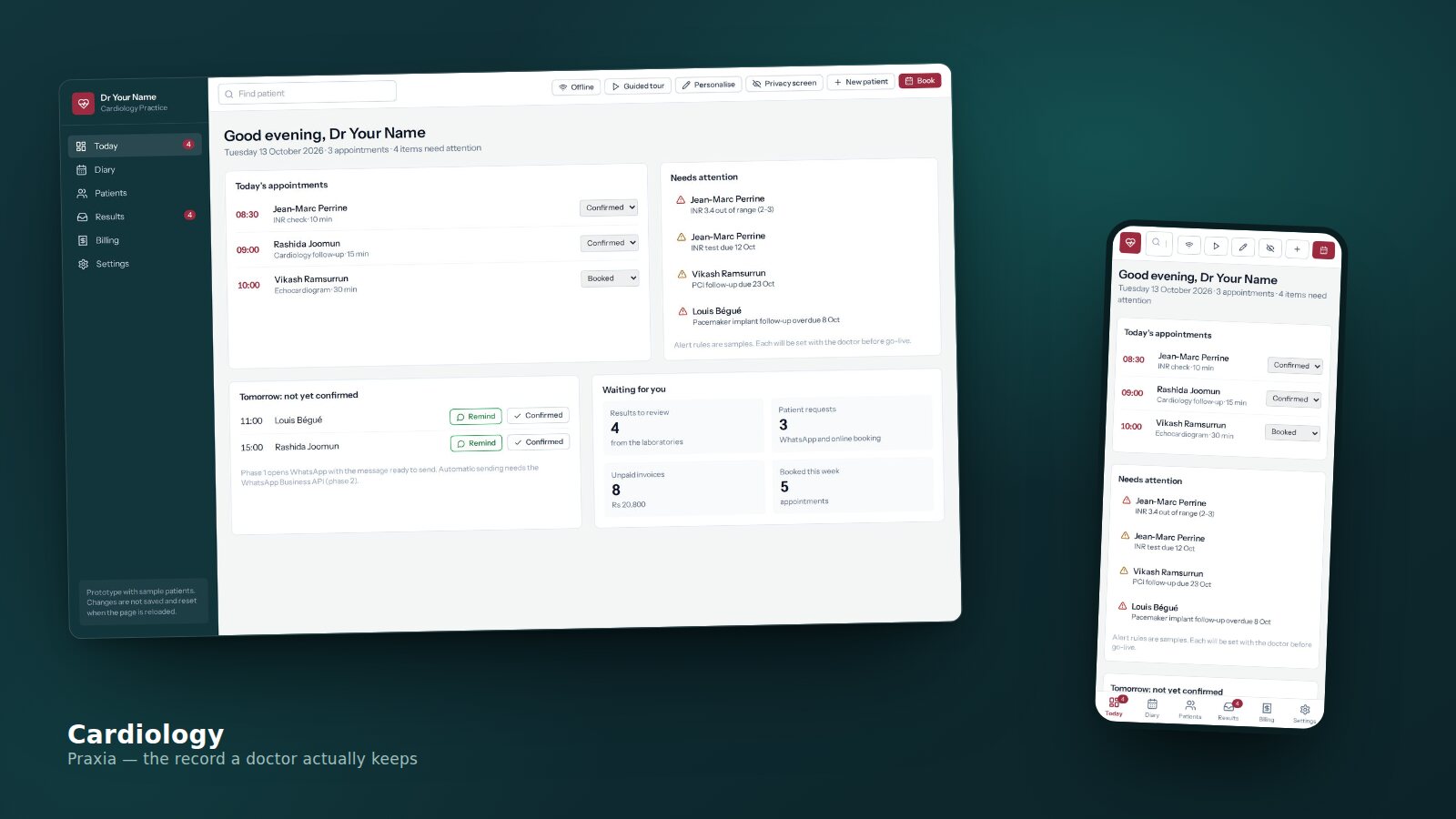
An INR, a device check or an echo that has fallen due sits above the day’s appointments on the first screen. The same record opens on a phone on a ward round.
What comes in the pack
Loaded before the first clinic, and every list yours to change afterwards.
- Three consultation forms — cardiology consultation, cardiology follow-up, pre-operative assessment
- 18 diagnoses, each with its ICD-10 code for insurance claims
- 14 medicines with the strengths, doses and frequencies you prescribe
- 14 appointment types, each with its length and its fee
- 23 tests and scans a cardiology practice orders
- Seven recalls for what you call patients back for
Drop a diagnosis you never use and add the one you reach for weekly. The appointment types already carry the durations and the fees a cardiology practice charges.
What it does not do
Worth saying plainly, because in cardiology a system that guesses is worse than one that waits.
- It does not suggest a warfarin dose. You decide the dose; it records what you decided and when the next test is due.
- It does not interpret an echo or an ECG. It keeps the numbers and the report, and leaves the reading to you.
- It does not score risk. No cardiovascular risk calculator, because a number like that belongs to the guideline it came from and to the year it was published.
Try it against a patient of your own
The demo opens from a USB stick with no internet: four sample patients, a warfarin log, an echo and a pacemaker follow-up. Nothing leaves the stick.